Street Photography
“The Internal State of Men”, “Rapture”, “In a Different Light”, et al
Last thursday was the very successful private view of our End of Year Show “Hidden Rivers“. Numerous visitors were on hand to admire the varied and interesting array of works presented by the Class of 2014, BTEC National Diploma in Photography, of the Kensington and Chelsea College. The 2014 End of Year Show Photography Prize was won by the talented and creative Gesine Garz, whom I had the honour of modelling for many times during the past year.
For those of you who have not yet visited our exhibition, I present my contribution.

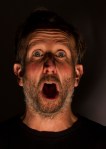



This is a series entitled “The Internal State of Men”, created in 2014, a group of portraits inviting you to identify the internal state of the model.
-
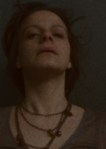
- Rapture
The title of this picture, inspired by the oeuvre of Sarah Moon, should speak for itself.
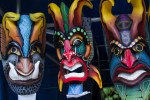
I also included some images familiar to the visitors of this blog, “The Dowager” and “The View, Horizontally“. The photo of “Los Espantos de Baldí” was included in the post about the colours of Costa Rica.
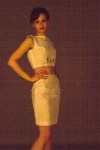
The final image I submitted to the Exhibition was one taken during my fashion shoot. It was created using my very own technique of rescuing photos which would otherwise be discarded. I call the photo “In a Different Light”.
If you like what you see and you are within the “neighbourhood”, stop by and visit our show.
#THROWBACKTHURSDAY (Images created before this blog existed)
For this first #throwbackthursday post, I present to you my series “The Crowns of London”, shot in the Autumn of 2012.
Upon moving to London in August 2011, one of the first things I noticed is that you find representation of crown all over the cities, in many guises and forms. I gather that the British take their royalty very serious and it makes a perfect to decorate the city. So please enjoy the images and I look forward to your comments.


Solarizing Liquid Light
Liquid Light is one of the most remarkable inventions in photography. It is a silver-based sensitiser and is a liquid form of the same emulsion found on ordinary photographic paper. (1) Liquid Light allows you to print photographs on a large variety of surfaces, such as wood, metal, glass and even eggs. (2)
-

- The Great Picture
In 2007, the largest photograph in the world was created with Liquid Light. It took 6 artists and 400 volunteers 9 months to create the image, named “The Great Picture”. The negative was created in and took up most of an aircraft hangar in California and measures 3,375 square feet. It was created by converting the hangar into a pinhole camera, which was recognised by the Guinness Book of World Records as the World’s Largest Camera. A total of 80 quarts of Liquid Lights were used. (2) One characteristic of Liquid Light is that it develops very quickly.
Solarization is the “complete or partial reversal of tones in an exposed and partially developed photographic print when given a uniform second exposure before being fixed and further developed to completion”. (3)
Recently, I experimented with Liquid Light on watercolour paper and got the (brilliant?) idea to attempt solarizing an image printed with the emulsion. This turned out to be a difficult endeavour as Liquid Light develops much faster than photographic paper. After a few totally black prints, a few tones began to emerge after shortening the already short time of the second exposure. And finally, success! Take a look at the original digital photo, the print using Liquid Light and the Solarized Liquid Light print.


(1) http://www.alternativephotography.com
(2) http://www.instructables.com
(3) An Introduction to Some Experimental Techniques, Elspeth Ross, 2012
HIDDEN RIVERS – End of Year Show 2014
CHECK OUT OUR SHOW CATALOGUE!
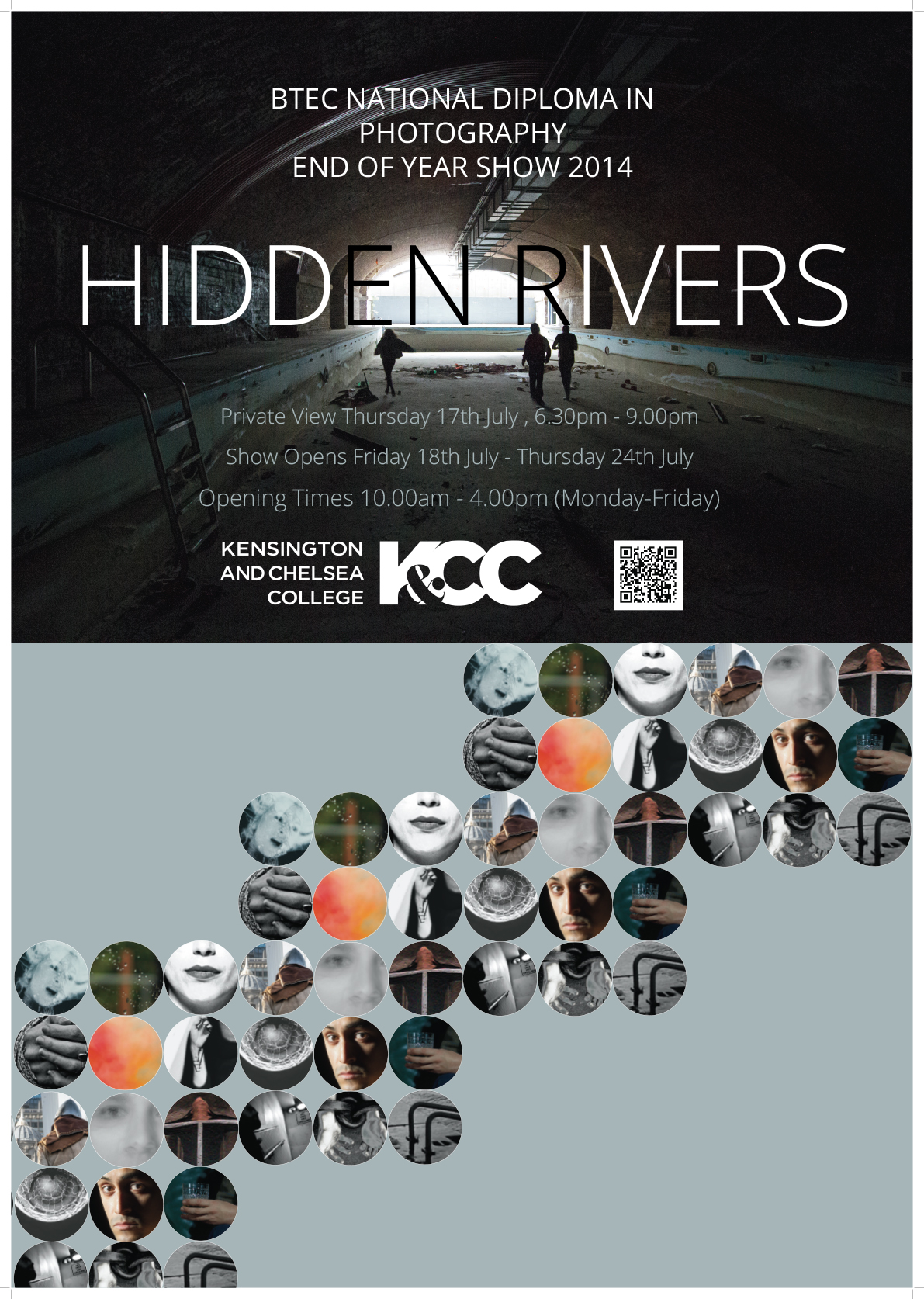
HIDDEN RIVERS
End of Year Show
BTEC National Diploma in Photography
Kensington & Chelsea College
PRIVATE VIEW: July 17, 2014, from 6:30 pm to 9:00 pm
SHOW DATES: July 18-22, 2014, daily from 10:00 am to 4:00 pm
Caerdydd


Caerdydd, wider known as Cardiff, is a vibrant and bustling city in Wales, South Western Great Britain. I was blessed with beaut
iful sunny summer days during my visit, allowing me to fully take in all the wonders of this city of 340 thousand inhabitants.


In the downtown area you will find buildings in many different architectural styles, which combine very well together. There are many covered shopping arcades dating back a few centuries, which made me wonder whether the idea for the modern day shopping mall was actually born in Cardiff.


The BBC has an enormous studio complex near the Porth Teigr area , where Dr. Who and Holby City, among others, are filmed. Porth Teigr itself with the Millennium Centre Opera House and the Senedd, the National Assembly for Wales is another interesting part of Cardiff with many quaint restaurants and shops.


With its inherent vitality, wondrous sites, busting pubs, cafés and restaurants, Cardiff is the perfect place for a weekend or an even longer holiday.


The View, Horizontally
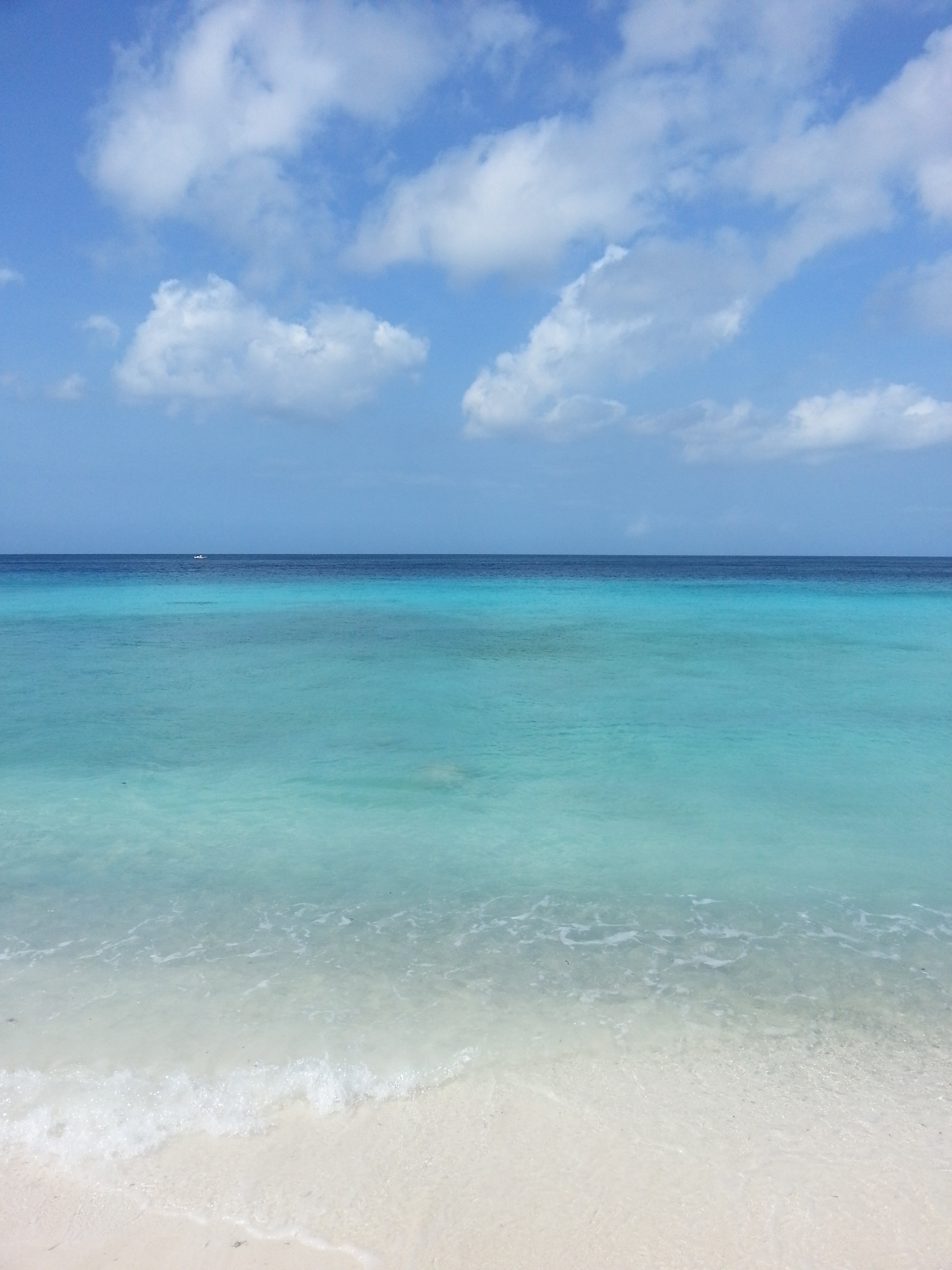 Ever since I was a young boy, I was intrigued by the idea of perception. If something is there, but you do not see it or experience it, is it there. Obviously in your occurring world it is not. How much of the world and of life itself simply does not exist for us, because we do not perceive it? Following my typology of circles, I continued to study the idea of things which are within our view yet we are not aware of their existence. Something that fulfils that description, is the horizon. The horizon is always there, even when we do not see it. And horizontal lines are an integral part of life, even if we are not conscious of them. Inspired by the typology work of Steve Tyler, I created a 9×9 grid to present a typology exploring the view we see horizontally. Four rows were left blank to create a typology of horizontal lines. Then I took the idea even further and created an imaginary horizontal line through each row of pictures. To the sweet sound of Caribbean Soca music, enjoy the View, Horizontally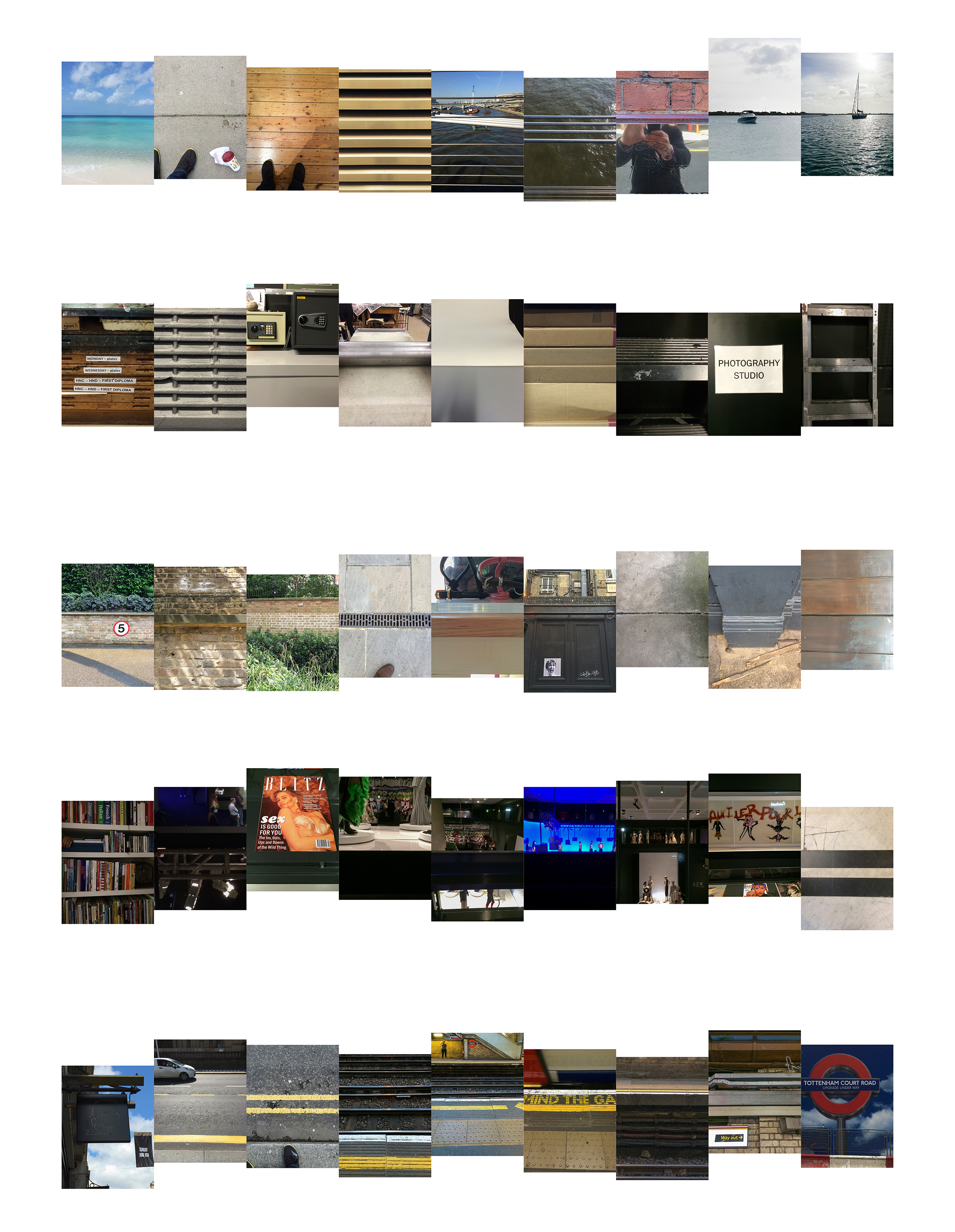
Reading a Photograph
National Media Museum
Science and Society Picture Library.
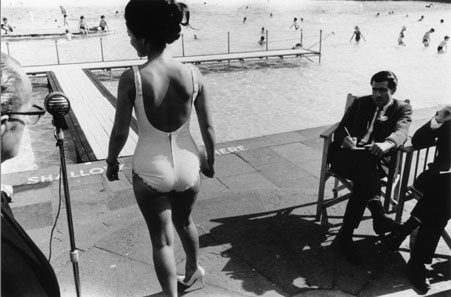
The finest work of Tony Ray-Jones (1941- 1972) was a record of the English at leisure. He was fascinated by the eccentricities of English social customs and Tony Ray-Jones spent the second half of the Sixties travelling across England, photographing what he considered to be a disappearing way of life. The resulting images are humorous yet melancholy [1].
As its title indicates, this is a photograph of a beauty contest. All the elements are there: a contestant in bathing suit and high heeled shoes, a microphone with which the contestants introduce themselves, a compère to guide the proceedings, the judges, complete with notepads, a catwalk and a public.
Furthermore this is a beauty contest at the beach and the catwalk is actually built in the water. From the looks of it, this contestant has just introduced herself and is starting her strut down the runway.
The bathing suit and figure of the contestant clearly exemplify the styles of the Sixties. However, for a daytime beauty contest on a beach, all the participants are highly overdressed. The contestant is wearing high-heeled pumps and is coifed in the style of the era, though more adequate for big city life than for the seaside. The compère and the judges are wearing dark suits, again much too formal for the beach and probably quite uncomfortable in the sun.
This is one of two photographs with the same title seen in the exhibition “Only in England“ at the Science Museum in London, presenting photographs by Tony Ray-Jones and Martin Parr. The other image shows a group of bored contestants and oblivious contest officials backstage.
Bathing suit beauty contests were extremely popular in the Sixties, particularly in England. The oldest international beauty competition, Miss World, actually started in England in the late Fifties. Yet despite this popularity, the public at this contest show absolutely no interest in it. This struck a cord with me.
Having been a beauty contest fan since the Sixties, I started organizing beauty contests in the late Eighties. As a contest producer, your worst nightmare is organizing an event that fails to grab the attention of the public. Having such a disinterested public is downright horrific.
Another item in this photograph that hijacked my attention was the high heeled pumps of the contestant. In the Nineties, the use of high heeled shoes in swimsuit competitions became a matter of much discussion, as it was argued that high heels are incongruous together with bathing suits. This idea is very much supported by this photograph.
Finally, the word “Shallow” is visible on the stage floor. With its visibility is Tony Ray-Jones expressing an opinion on the proceedings?
This image is a unique record of a beauty contest that takes itself too seriously and a public that does not take it at all.
[1] Science Museum Exhibition Notes
Il villagio d’Acireale
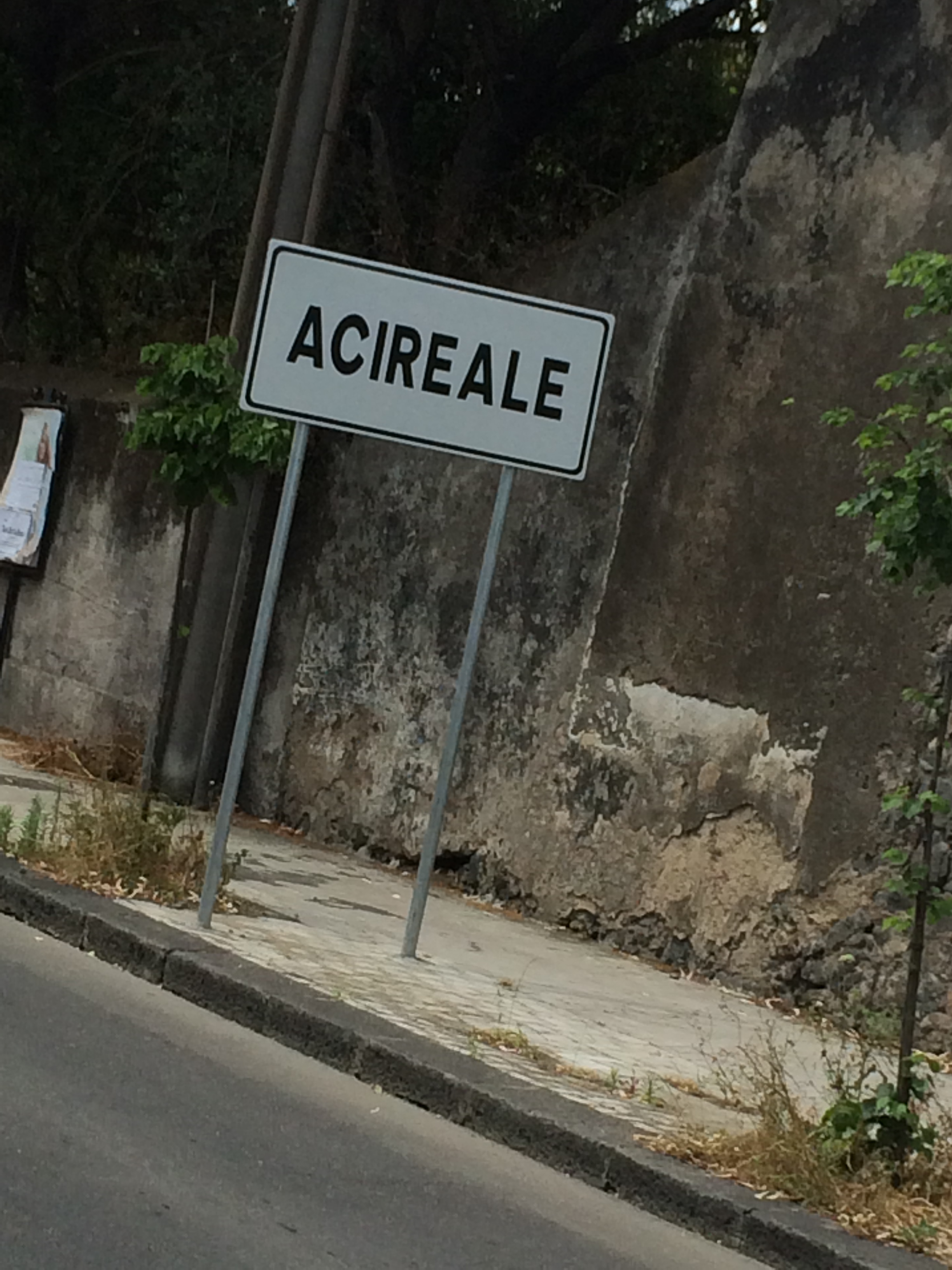
The last weekend of May 2014 was quite unforgettable. I spent it in Sicily, Italy, to attend the wedding of a very dear friend. More specifically, I was in the village of Acireale, at about an hour’s distance from Catania. It is a picturesque place, with narrow streets, sometimes no sidewalks and an amazing collection of baroque buildings.


It was quite an interesting experience getting to know Acireale and its friendly inhabitants. I even found a connection to another passion of mine (hint: beauty pageants). Definitely a suggested vacation destination!
Typologies are all around us!
A typology is a study of types or groups of similar thing. In a typology everything is the same, yet different.
A photographic typology is a series of images shot in a consistent, repetitive manner and presented in a grid. Every image has its own space, equal to that of the other photographs and there is great attention to composition. The subjects are often mundane.

The first typology I created was one of circles. The idea was to make the viewer think about the presence of circles in our lives. You may not realise this, but circles are all around us!
For our second typology we were placed in groups of 6 and the assignment was to create a typology of the group.
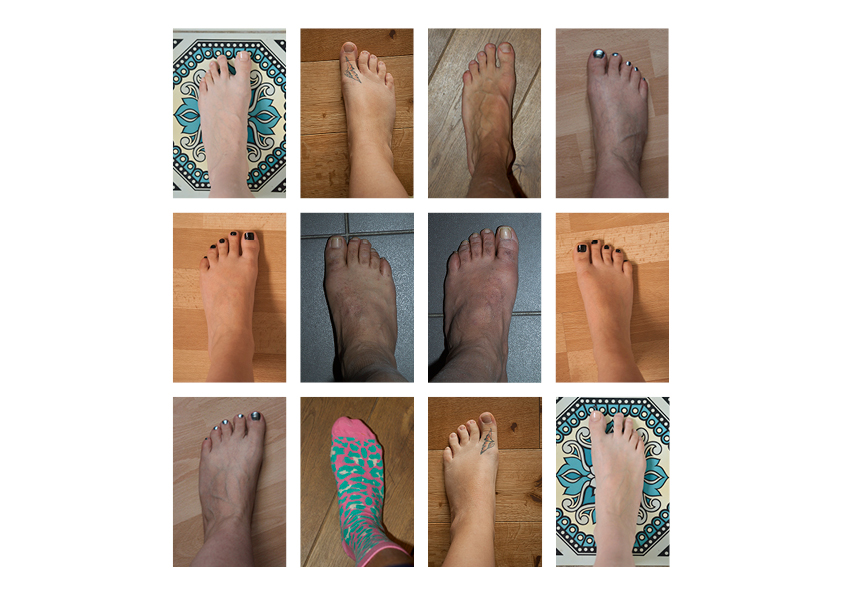
I chose to make one of the feet of the group members. The images are all appropriated as each member of the group took a selfie of their own feet.
The Colours of “Pura Vida”

Pura vida is a characteristic Costa Rican phrase. The literal translation is “pure life”. However, the expression is used to convey different meanings such as “plenty of life”, “full of life”, “doing great” and also “this is living!”. The phrase can be used in many ways and even as both a greeting or a farewell, as an answer expressing that things are goingwell, or as a way of giving thanks.
It is clearly evident in the Costa Rican attitude towards nature, which is celebrated, appreciated and protected. Therefore it should come as no surprise that the predominant colour in Costa Rica is green. In the rural area you are treated to miles and miles and miles, as far as the eye can see, of green. Many different textures and tones of green, often uninterrupted by any other colour.


Maybe to balance out all that green, the urban areas of Costa Rica, like its capital San José, display bursts of strong and vivid colours. It is an environment one would imagine William Eggleston to be very happy to work in.


- ← Previous
- 1
- …
- 3
- 4
- 5
- Next →
 Lightpainting by Richard John Isa